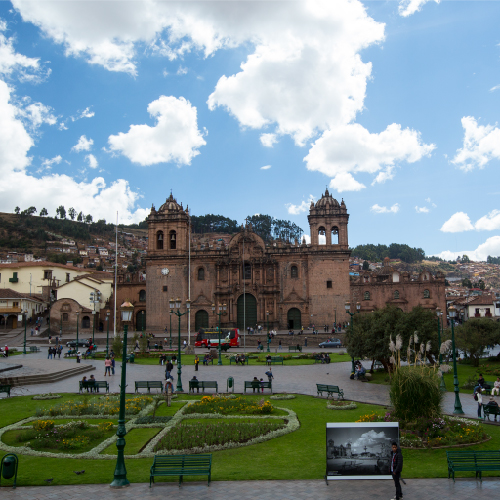
Begin your journey in the Andes with our Cusco City Tour — a perfect half-day experience designed to immerse you in the rich history and culture of this magical city. The tour starts with a visit to two of Cusco's most iconic landmarks: the impressive Cathedral in the Main Square and Qorikancha, the ancient Temple of the Sun. From there, we head to the outskirts of the city to explore four remarkable Inca archaeological sites: the monumental Sacsayhuamán, the ceremonial site of Qenqo, the strategic military post of Puka Pukara, and the sacred fountains of Tambomachay. Located at 3,300 meters (10,826 feet) above sea level, Cusco is a fascinating blend of Inca heritage and colonial charm. Its beauty, history, and vibrant atmosphere captivate every visitor. This tour is the perfect way to get oriented in the city and prepare for the many unforgettable day trips that start from Cusco.
Qorikancha was the most important temple in the Inca Empire. It was dedicated to Inti, the Sun God. The walls were once covered with sheets of gold, and there were golden statues inside. It was a center for religion, astronomy, and Inca power. Today, the Santo Domingo Church is built on top of its remains.
Sacsayhuaman is a massive fortress located on a hill above Cusco. It is made of huge stone blocks that fit together perfectly without any cement. Some stones weigh over 100 tons. It was used for military purposes and religious ceremonies. It also offers beautiful panoramic views of Cusco.
Qenqo was a religious and ceremonial site used by the Incas. It has carved stone passages, an open area for rituals, and an underground chamber where sacrifices and mummification may have taken place. It was likely used to honor Pachamama (Mother Earth) and other deities.
Tambomachay is known as the "Bath of the Inca." It has a series of canals, aqueducts, and waterfalls that still carry water today. The site was probably used for water worship and purification rituals. It also shows the Incas' advanced knowledge of hydraulic engineering.
Puka Pukara means "Red Fortress" in Quechua, named for the reddish color of its stones. It served as a military post and resting place for travelers, especially for those on their way to Tambomachay. Its strategic location provided control of the surrounding valley.